ברוכים הבאים למרכז היצירתיות
רשימת נושאים:
היה יצירתי אף יותר
יצירתיות אינה מתת אל השמורה לכמה יחידים ברי מזל. כמעט כל בני האדם נולדים יצירתיים. המחקר מוכיח זאת בבירור.
יצירתיות היא כלי חיוני המאפשר לנו לשרוד, להסתגל ולצמוח. אולם ככל שאנו מתבגרים, אנו מאמצים בהדרגה דפוסי חשיבה קבועים. בתהליך זה, רבים מאיתנו מאבדים את הגישה ליכולותיהם היצירתיות.
באופן פרדוקסלי, ככל שאנו מתבגרים, הצורך ביצירתיות אינו פוחת — להיפך, הוא גדל, שכן מספר האתגרים ומורכבותם הולכים וגדלים.
עלייתה של הבינה המלאכותית יוצרת הזדמנות ייחודית להעמיד כלי יצירתי רב-עוצמה לרשותכם: Be Creative.
בחלק זה של האפליקציה, כל מי שרוצה להרחיב ולהעמיק את הבנתו ביצירתיות ימצא אוסף עשיר של חומרים מרתקים ומעוררי השראה.
במרכז היצירתיות אנו מציעים רשימה ביבליוגרפית שהכין פרופ' שלמה מייטל. תוכל גם לגשת ישירות דרך הקישור המצורף לספר:
פיצוח קוד היצירתיות: מסגרת ליצירתיות, כיף והצלחה
מאת אריה רוטנברג ושלמה מייטל, המבוסס על ניסיון שנצבר במשך שנים וחקר אישי של יצירתיות.
ספר זה היה הראשון שהציג את התובנה שתוצאות יצירתיות מיטביות דורשות גם חשיבה מתכנסת וגם חשיבה מתפצלת, המתורגלות בשלבים נפרדים ומובחנים. תובנה זו הפכה כעת לכלי מעשי — המוצע כאן לשימושך האישי.
הספר מציג גם דוגמאות מהעולם האמיתי, הממחישות כיצד עקרונות אלה פועלים בפועל.
בחלק זה של האפליקציה נמשיך לשתף פרסומים חדשים ורלוונטיים מעולם היצירתיות, יחד עם יוזמות נוספות המתוכננות לשלבים הבאים של המסע המשותף שלנו.
אנו מאחלים לכם הצלחה רבה — ובעיקר הנאה רבה — כשהיצירתיות מתעוררת ומתחדשת בתוככם.
שיטת ZI-ZO-ZI לפיתוח רעיונות יצירתיים
לפרטים נוספים על השיטה עברו לדף המוקדש לה:
לדף ZI-ZO-ZIהספר: פיצוח קוד היצירתיות
קישור לספר פיצוח קוד היצירתיות שהציג לראשונה את השימוש בזום אין - זום אאוט לשיפור היכולת היצירתית, הרקע לכך ודוגמאות מעניינות. ניתן להוריד את הספר ולשמור אותו במחשב האישי שלכם.
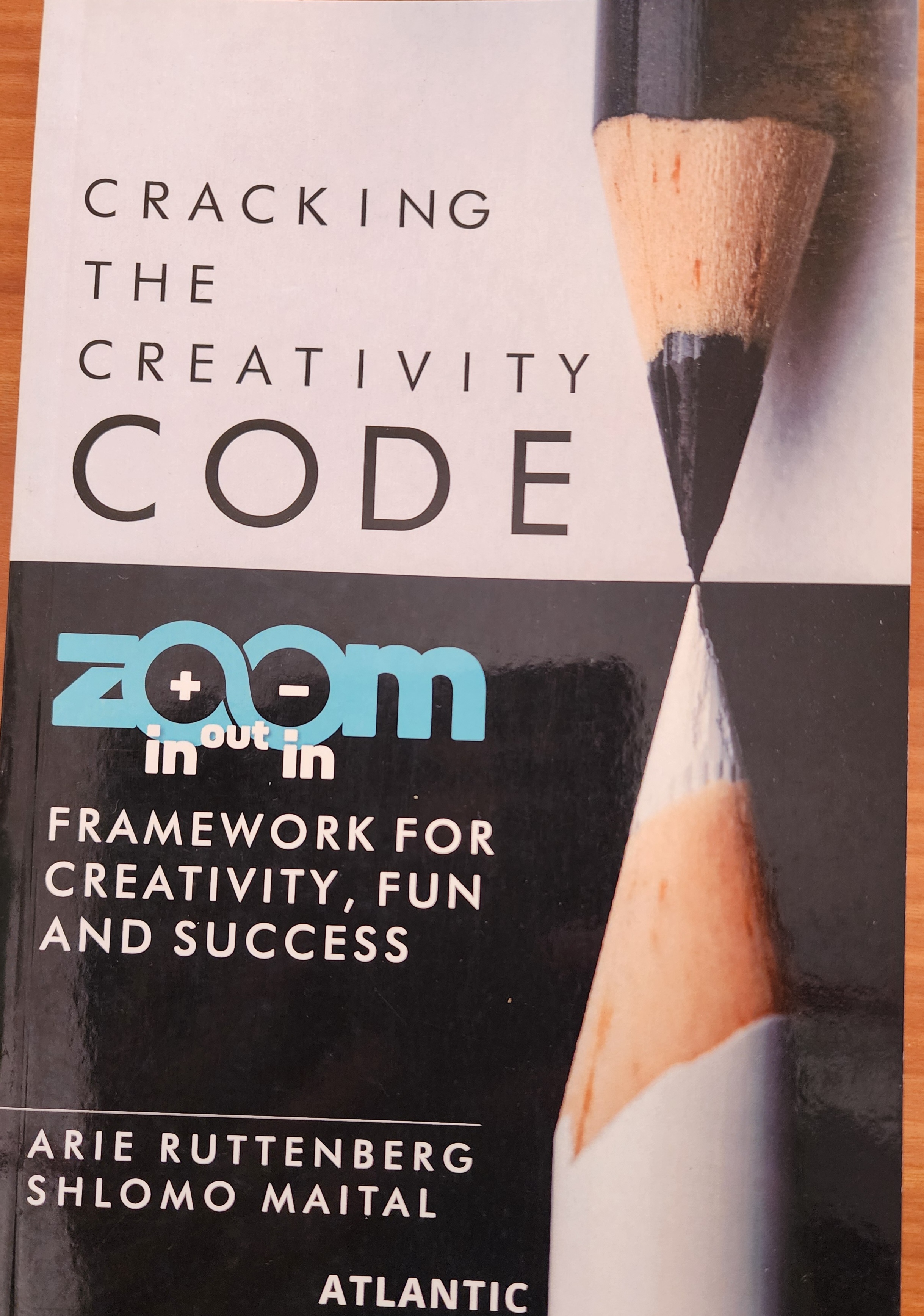
Ruttenberg & Maital
פרק 10 — מחקרי מוח
קישור לפרק שנוסף לספר, מספר שנים לאחר פרסומו, כאשר מחקרי מוח הוכיחו את נכונות הגישה היצירתית שלנו. פרק זה מתאר את המחקרים החדשים והמעניינים.
סרטון: I&AI ביצירתיות
צפו בסרטון המציג את הגישה שלנו ליצירתיות בשילוב בינה מלאכותית:
לחץ לצפייה בסרטון ב־YouTube
ביבליוגרפיה
רשימת ספרים שנבחרו על ידי פרופסור שלמה מייטל, למעוניינים להרחיב ולהעמיק את הבנתם בנושא היצירתיות:
- Sternberg, R. J. (2003). Wisdom, intelligence, and creativity synthesized. New York: Cambridge University Press.
- Sternberg, R.J. (2006). The nature of creativity. Creativity Research Journal, 18(1), 87–98.
- Csikszentmihalyi, Mihaly. (1990). Flow: The psychology of optimal experience. New York: Harper and Row.
- Torrance, E. Paul. (1972). Teaching for creativity. Journal of Creative Behavior, 6(2), 114–143.
- Kyung Hee Kim. (2006). Can we trust creativity tests? Creativity Research Journal, 18(1), 3–14.
- Bronson, Po & Merryman, Ashley. (2010). The creativity crisis. The Daily Beast, Newsweek, July. Retrieved from thedailybeast.com (accessed June 7, 2014)
- Land, G. & Jarman, B. (1992). Breakpoint and beyond: Mastering the future today. New York: Harper Business.
- Zhao, Y. (2006). Creativity cannot be taught, but it can be killed. Detroit Free Press, 10. Retrieved from zhaolearning.com (accessed June 7, 2014)
- Simonton, Dean Keith. (1999). Creativity as blind variation and selective retention: Is the creative process Darwinian? Psychological Inquiry, 10(4), 309–328.
- Guilford, J.P. (1950). Creativity. American Psychologist, 5(9), 444–454.
- Sternberg, R.J. and Dess, Nancy K. (2001). Creativity for the new millennium. American Psychologist, 56(4), 332.
- Kasof, J. (1997). Creativity and breadth of attention. Creativity Research Journal, 10(4), 303–315.
- Mumford, Michael. (2003). Where have we been, where are we going? Taking stock in creativity research. Creativity Research Journal, 15(2–3), 107–120.
- Isaksen, S.G. & Treffinger, D. (2004). Celebrating 50 years of reflective practice: Versions of creative problem solving. Journal of Creative Behavior, 38(2), 75–101.
- Baer, John & Kaufman, James C. (2005). Bridging generality and specificity: The Amusement Park Theoretical (APT Model of Creativity). Roeper Review, 27(3), 158–163.
- Feist, Gregory J. & Runco, Mark A. (1993). Trends in the creativity literature: An analysis of research in the Journal of Creative Behavior (1967–1989). Creativity Research Journal, 6(3), 271–283.
- Feldhusen, John F. & Goh, Ban Eng. (1995). Assessing and accessing creativity: An integrative review of theory, research and development. Creativity Research Journal, 8(3), 231–247.
- Sternberg, Robert J. & Lubart, Todd J. (1996). Investing in creativity. American Psychologist, 51(7), 677–688.
- De Bono, Edward (1995). Mind power: Discover the secrets of creative thinking. New York: DK Publishing.
- Urban, Klaus K. (1991). On the development of creativity in children. Creativity Research Journal, 4(2), 177–191.
- Fasko, Daniel, Jr. (2000–2001). Education and creativity. Creativity Research Journal, 13(3–4), 317–327.
- Torrance, E.P. (1972). Can we teach children to think creatively? Journal of Creative Behavior, (6), 114.
- Osborn, Alex (1952). Wake up your mind: 101 ways to develop creativeness. New York: Scribners.
- Ariely, Dan (2012). The honest truth about dishonesty: How we lie to everyone — especially ourselves. New York: HarperCollins.
- Maital, S. & Seshadri, D.V.R. (2012). Innovation management: Strategies, concepts and tools for growth and profit. New Delhi: SAGE.
- Simonton, Dean Keith (2003). Scientific creativity as constrained stochastic behavior: The integration of product, person and process perspectives. Psychological Bulletin, 129(4), 475–494.
- Glück, Judith, Ernst, Roland, & Unger, Floortje. (2002). How creatives define creativity: Definitions reflect different types of creativity. Creativity Research Journal, 14(1), 55–67.
- Dorst, Kees & Cross, Nigel. (2001). Creativity in the design process: Co-evolution of problem-solution. Design Studies, 22(5), 425–437.
- Elsbach, Kimberly D. & Kramer, Roderick M. (2003). Assessing creativity in Hollywood Pitch Meetings: Evidence for a dual-process model of creativity judgments. Academy of Management Journal, 46(3), 283–301.
- Maital, S. (November 28, 2012). Pixar: What innovators can learn. Retrieved from timnovate.wordpress.com (accessed June 7, 2014)
- Sawyer, Keith. (1992). Improvisational creativity: An analysis of jazz performance. Creativity Research Journal, 5(3), 253–263.
- Akin, Ömer & Akin, Cem. (1998). On the process of creativity in puzzles, inventions and designs. Automation in Construction, 7(2), 123–138.
- Behrens, R.R. (1974). On creativity and humor: An analysis of easy street. Journal of Creative Behavior, 8(4), 227–238.
- Scott, Ginamarie, Leritz, Lyle E., & Mumford, Michael D. (2004). The effectiveness of creativity training: A quantitative review. Creativity Research Journal, 16(4), 361–388.
- Oldham, Greg & Cummings, Anne. (1996). Employee creativity: Personal and contextual factors at work. Academy of Management Journal, 39(3), 607–634.
- Baas, Matthijs, De Dreu, Carsten K.W., & Nijstad, Bernard A. (2008). A meta-analysis of 25 years of mood-creativity research: Hedonic tone, activation or regulatory focus? Psychological Bulletin, 134(6), 779–806.
- Eisenberger, Robert & Shanock, Linda. (2003). Rewards, intrinsic motivation and creativity: A case study of conceptual and methodological isolation. Creativity Research Journal, 15(2–3), 121–130.
- Amabile, Teresa M. (1998). How to kill creativity. Harvard Business Review, September–October, 77–87.
- Ekvall, Goran & Britz, Alexander. (2000–2001). Perceptions of the best and worst climates for creativity: Preliminary validation evidence for the situational outlook questionnaire. Creativity Research Journal, 13(2), 171–184.
- Shenk, David. (2010). The Genius in all of us: Why everything you've been told about genetics, talent and IQ is wrong. New York: Doubleday.
- Hayes, John R. (1990). Cognitive processes in creativity. Occasional Paper No. 18, Carnegie Mellon University, Pittsburgh, PA.
- Kruse, Michael (March 25, 2011). Can a complete novice become a golf pro with 10,000 hours of practice? Tampa Bay Times.
- Gladwell, Malcolm. (2008). Outliers: The story of success. New York: Little Brown.
- Begley, Sharon. (2007). Train your mind, change your brain: How a new science reveals our extraordinary potential to transform ourselves. New York: Ballantine.
- Doidge, Norman. (2007). The brain that changes itself: Stories of personal triumph from the frontiers of brain science. New York: Penguin.
- Watters, Ethan. (2006). DNA is not destiny: The new science of epigenetics. Discover Magazine, November.
- Isaksen, S.G. & Treffinger, D. (2004). Journal of Creative Behavior, 38(2), 75–101.
- Osborn, Alex. (1952). Wake up your mind: 101 ways to develop creativeness.
- Koberg, D. & Bagnall, J. (1974). The universal traveler: A soft-systems guide to creativity, problem-solving, and the process of design. Los Altos, CA: W. Kaufmann.
- Fritz, Robert. (1993). Creating: a practical guide to the creative process and how to use it to create anything — A work of art, a relationship, a career or a better life. New York: Ballantine.
- Barron, F. (1988). Putting creativity to work. In R.J. Sternberg (ed.), The nature of creativity. Cambridge, England: Cambridge University Press.
- Rossman, J. (1931). The Psychology of the inventor. Washington DC: Inventor's Publishing. American Society of Landscape Architects. Retrieved from asla.org (accessed June 7, 2014)
- Drucker, Peter. (1994). The theory of the business. Harvard Business Review, 72(5), 95–104.
- Miller, Jay. (1995). Lockheed Martin's Skunk works: The official history (updated edition). Arlington, TX: Aerofax.
- Hertzfeld, Andy. (2004). Revolution in the valley: The insanely great story of how the Mac was made. Sebastopol, CA: O'Reilly Media, Inc.
- Sutton, Robert & Hargadon, Andrew. (1996). Brainstorming groups in context: Effectiveness in a product design firm. Administrative Science Quarterly, 41(4), 685–718.
- ABC News (July 13, 1999). The Deep Dive IDEO's innovation approach. Nightline. Retrieved from abcnews.com (accessed June 7, 2014)
- Wujec, Tom. (2010). Marshmallow Challenge. Retrieved from marshmallowchallenge.com (accessed June 7, 2014)
- Brockman, John. (2000). Design for life. A Talk With Patrick Bateson. Retrieved from edge.org (accessed June 7, 2014)